The Basics of Balanced Nutrition, Without the Hype
Quick Answer / Key Takeaways
- Balanced nutrition is rooted in variety: ample vegetables and fruits, whole grains, lean proteins, and minimal added sugars or ultra-processed foods (CDC, WHO).
- Extreme diets and "superfood" fads are rarely evidence-based and often unsustainable.
- No single food or supplement can compensate for an overall poor dietary pattern.
- Authoritative, non-commercial guidance is available from sources like the NIH, NHS, and Academy of Nutrition and Dietetics.
- Small, incremental changes—like adding a vegetable serving daily—are more effective (and sustainable) than drastic overhauls.
- For most people, balanced nutrition does not require eliminating entire food groups, unless medically necessary.
- Consult a registered dietitian or clinician for individualized advice, especially if you have health conditions or dietary restrictions.
Who Is This For / When Do You Need It?
This guide is for anyone seeking straightforward, evidence-based advice on balanced nutrition without commercial bias or hype. Whether you’re overwhelmed by conflicting online advice, recovering from restrictive dieting, or simply aiming to improve your eating habits, these principles apply. It’s especially relevant for adults and older teens, though parents and caregivers can also use these basics to guide family meals.
Balanced nutrition matters at all life stages, but its importance is heightened during periods of growth, pregnancy, recovery from illness, athletic training, and aging. If you have chronic health conditions (such as diabetes, heart disease, or food allergies), or if you’re considering major dietary changes, consult a healthcare provider or registered dietitian. While this guide covers general wellness, it is not a substitute for medical advice—always seek professional input for specific health needs.
Best Options
| Approach | Time needed | Evidence level | Cost | Best for |
|---|---|---|---|---|
| USDA MyPlate | Minimal (5-10 min/day for planning) | High (government, peer-reviewed) | Free | General population, families |
| Mediterranean-Style Eating | Moderate (meal prep, 30-60 min/day) | High (extensively studied) | Moderate (varies by food choices) | Heart health, longevity |
| DASH Diet | Moderate (requires meal planning) | High (NHLBI, clinical trials) | Moderate | Blood pressure management |
| Harvard Healthy Eating Plate | Minimal to moderate | High (academic, evidence-based) | Free | General wellness, clarity |
| Plant-Forward Eating | Moderate (some meal planning) | Moderate to high | Variable (can be low-cost) | Vegetarian/vegan, sustainability |
| Registered Dietitian Consultation | Variable (30-60 min/visit) | Very high (personalized, credentialed) | $$ (may be covered by insurance) | Personalized needs, medical issues |
USDA MyPlate
What It Includes / How It Works
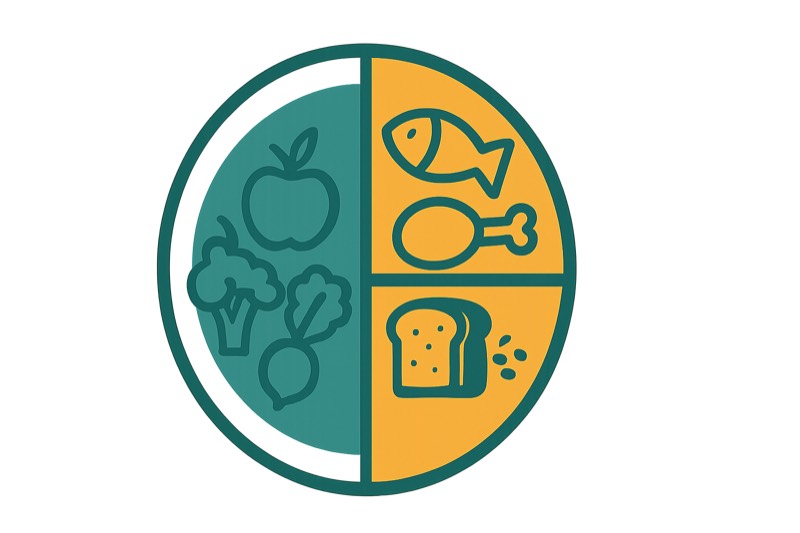
MyPlate is the U.S. Department of Agriculture’s visual guide for building balanced meals. It divides your plate into four sections (fruits, vegetables, grains, protein) plus a serving of dairy, encouraging variety and portion balance. The MyPlate website offers free tools, recipes, and meal planning resources tailored for different ages and lifestyles.
Key Features
- Simple, visual guide for meal composition
- Customizable resources for families, children, and adults
- Free mobile app and interactive tools
Pros & Cons
- Pros: Easy to understand; no food group elimination; evidence-based; suitable for most people.
- Cons: Some critics note the inclusion of dairy may not suit all populations; limited cultural customization.
Cost
Free (all resources and tools are accessible online).
Harvard Healthy Eating Plate
What It Includes / How It Works
Created by the Harvard T.H. Chan School of Public Health, this model expands on MyPlate by emphasizing healthy oils, water instead of sugary drinks, and quality of carbohydrates and proteins. The accompanying website offers detailed explanations, sample meals, and tips for practical application.
Key Features
- Focus on plant oils, whole grains, and healthy proteins
- Advises limiting red meat and processed foods
- Free, evidence-based educational materials
Pros & Cons
- Pros: Prioritizes overall dietary quality; clear recommendations on fats and beverages; globally relevant.
- Cons: May require more time to understand nuances; less official support in public schools or programs compared to MyPlate.
Cost
Free (all resources available online).
Read more: Harvard Healthy Eating Plate
DASH Diet
What It Includes / How It Works
The DASH (Dietary Approaches to Stop Hypertension) plan, developed by the National Heart, Lung, and Blood Institute, is designed to lower blood pressure. It emphasizes fruits, vegetables, whole grains, low-fat dairy, and limits sodium, red meat, and added sugars. DASH is supported by extensive clinical research and comes with meal plans and recipes.
Key Features
- Clinically validated for blood pressure control
- Structured meal planning resources
- Adaptable to diverse dietary needs
Pros & Cons
- Pros: Strong evidence base; supports cardiovascular health; widely recommended by clinicians.
- Cons: May require effort to reduce sodium and processed foods; less flexibility for dining out.
Cost
Free (resources and guides on the NHLBI website); grocery costs vary but can be moderate with planning.
Mediterranean-Style Eating
What It Includes / How It Works
This dietary pattern, modeled on traditional cuisines of countries bordering the Mediterranean Sea, is rich in vegetables, fruits, whole grains, legumes, nuts, olive oil, and moderate fish and poultry. Red meat and sweets are infrequent. The Mediterranean Diet is linked to lower rates of heart disease and increased longevity, as confirmed by numerous studies.
Key Features
- Flexible, flavorful, and culturally diverse
- Emphasizes plant-based foods and healthy fats
- Endorsed by the American Heart Association
Pros & Cons
- Pros: Well-researched; enjoyable and sustainable; promotes heart and brain health.
- Cons: May require more home cooking and fresh ingredients; some foods (e.g., olive oil, nuts) can be costly.
Cost
Grocery costs are moderate to high, depending on ingredient choices; no program or subscription fees.
Read more: Mediterranean-Style Eating
Plant-Forward Eating
What It Includes / How It Works
Plant-forward diets prioritize vegetables, fruits, legumes, whole grains, nuts, and seeds, while reducing but not always eliminating animal products. This approach is adaptable, ranging from flexitarian to fully vegetarian or vegan. Research supports plant-based diets for their role in reducing chronic disease risk and environmental impact, as noted by the NHS and CDC.
Key Features
- Flexible spectrum from flexitarian to vegan
- Potentially lower grocery costs if centered on whole foods
- Supports health and sustainability
Pros & Cons
- Pros: Adaptable to different preferences; evidence-based benefits; can be cost-effective.
- Cons: Requires attention to certain nutrients (e.g., B12, iron); social or cultural challenges for some.
Cost
Highly variable; can be low-cost with beans, grains, and seasonal produce, or higher with specialty products.
Read more: Plant-Forward Eating
Registered Dietitian Consultation
What It Includes / How It Works
Registered Dietitians (RDs) are credentialed nutrition professionals who provide personalized, evidence-based advice. Consultations may be in person or virtual, and can address medical conditions, food allergies, weight management, or optimizing general health. RDs are often covered by insurance for certain conditions in the US; check with your provider.
Key Features
- Personalized nutrition assessment and planning
- Medical nutrition therapy for specific health needs
- Guidance on label reading, meal prep, and habit change
Pros & Cons
- Pros: Individualized support; highest level of expertise; helpful for complex or medical cases.
- Cons: May involve out-of-pocket costs if not covered by insurance; finding a good fit can take time.
Cost
Session fees range from $50–$250 per visit; some insurance plans cover part or all of the cost—verify with your provider and the Academy of Nutrition and Dietetics.
Read more: Registered Dietitian Consultation
How to Choose / What to Look For
When selecting a nutrition approach, prioritize sources with transparent, science-based recommendations over those selling products or pushing restrictive trends. Look for flexibility—diets that allow for your preferences, culture, and lifestyle are more likely to be sustainable. Resources from public health agencies, academic institutions, or credentialed professionals are more trustworthy than those with commercial interests.
Be wary of any plan that promises rapid, dramatic results or requires you to eliminate entire food groups without medical necessity. Check for clear information on portion sizes, food variety, and practical tips for label reading and meal planning. Finally, consider your own goals: weight management, improved energy, chronic disease risk reduction, or simply eating more mindfully. Your choice should support your long-term health, not just short-term fixes.
How to Get Started / Practical Steps
- Start by adding—not subtracting—healthful foods: aim for one extra serving of vegetables or fruit per day.
- Read nutrition labels to check for added sugars, sodium, and fiber content; focus on whole, minimally processed foods.
- Plan meals ahead to reduce reliance on convenience or takeout options; batch cook or prep ingredients when possible.
- Use a reputable online tool such as MyPlate or the NHS Eat Well Guide to visualize balanced meals.
- Gradually shift your plate: fill half with vegetables and fruit, one quarter with whole grains, and one quarter with lean protein.
- Set realistic, specific goals (e.g., “I’ll have oatmeal with berries for breakfast three days this week” rather than “eat healthier”).
- Monitor your progress and adjust as needed; celebrate incremental successes rather than aiming for perfection.
- If you have medical conditions or are unsure about a dietary change, schedule a session with a registered dietitian.
Limitations
No single dietary pattern is right for everyone. Genetics, health status, cultural preferences, and access to food all influence what “balanced” looks like for each person. Evidence-based guidelines provide a solid starting point, but individual needs—such as for those with allergies, metabolic conditions, or athletes—may differ substantially.
Additionally, nutrition science is complex and sometimes contradictory; even reputable authorities may update recommendations as research evolves. Food access and affordability are real barriers for many, and not all advice is practical in every setting. Lastly, while general wellness information is useful, it does not replace individualized medical guidance—consult a healthcare provider for specific concerns or before making major dietary changes.
Final Thoughts / Recommendation
Balanced nutrition is less about rigid rules and more about consistent, flexible habits: enjoying a variety of whole foods, limiting added sugars and highly processed products, and making gradual, sustainable changes. Authoritative resources like the NIH, CDC, NHS, and Academy of Nutrition and Dietetics offer reliable, non-commercial information to help you make informed choices.
If you’re overwhelmed by conflicting advice or unsure how to begin, start small: add a serving of vegetables, read food labels, and question extreme claims. For those with specific health needs or seeking tailored guidance, a registered dietitian is the gold standard. Remember, the fundamentals of balanced nutrition have stood the test of time—steady, realistic improvements are more effective than chasing trends or perfection.
Frequently Asked Questions
Is there a single "best" diet for everyone?
No. While general patterns—like eating more plants, fewer added sugars, and a variety of whole foods—are widely beneficial, individual needs vary based on health status, culture, preferences, and medical conditions. Consult a dietitian for personalized recommendations.
Do I need to cut out entire food groups for balanced nutrition?
In most cases, no. Mainstream public health guidance (e.g., from the CDC and NHS) does not recommend eliminating entire food groups unless you have a medical reason, such as an allergy or intolerance. Variety within and across food groups is key for nutritional adequacy.
Are "superfoods" necessary for good health?
No single food—regardless of its nutrient profile—can make up for an otherwise poor diet. While foods like berries, leafy greens, and fatty fish are healthy choices, the overall pattern of your eating habits matters much more than any one food.
How can I tell if a nutrition source is credible?
Look for sources affiliated with established health organizations (such as the NIH, CDC, NHS, or academic institutions) and those that cite peer-reviewed research. Be cautious of advice that promises rapid results, requires expensive supplements, or is tied to product sales.
What are some common mistakes when trying to eat healthier?
Common pitfalls include making drastic, unsustainable changes; focusing on single foods or nutrients rather than overall patterns; and falling for marketing claims without evidence. It’s better to set small, achievable goals and build habits gradually.
When should I seek professional help for nutrition?
If you have a chronic health condition, are considering a major dietary change, struggle with disordered eating patterns, or are unsure how to meet your nutritional needs, consult a registered dietitian or clinician. For urgent mental health support in the US, contact the 988 Suicide & Crisis Lifeline.
How do physical activity and sleep fit into balanced nutrition?
Nutrition is one pillar of overall wellness. The WHO recommends 150–300 minutes per week of moderate activity, while the CDC suggests adults aim for 7 or more hours of sleep nightly. These habits reinforce each other and are important for long-term health.
Disclosure: This article is general wellness information, not medical advice. Consult a qualified clinician about your own circumstances.